
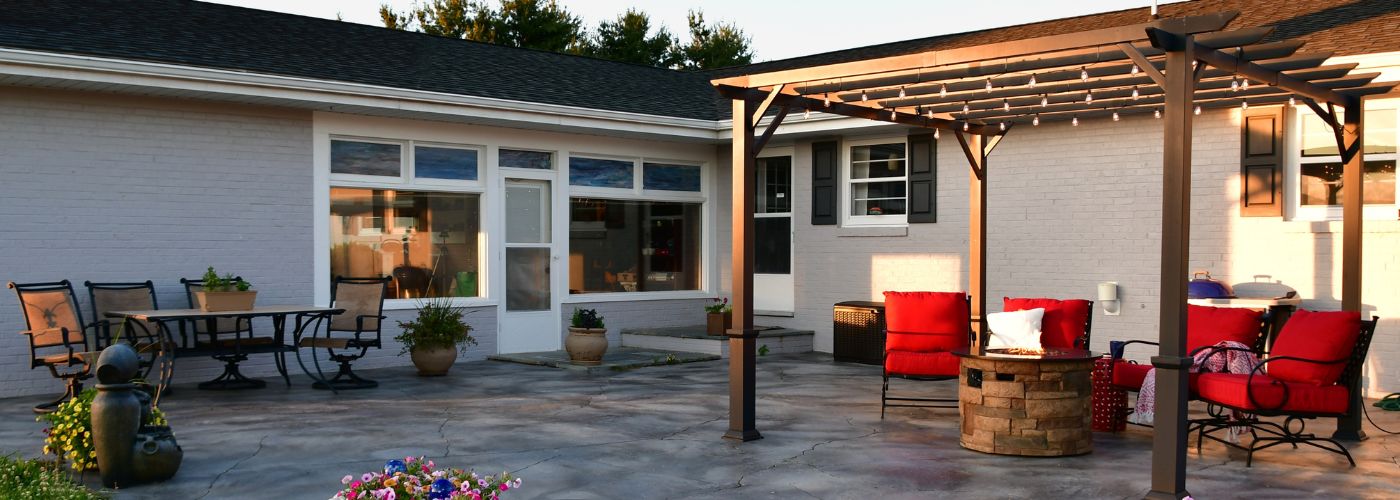
Outdoor living spaces in Las Vegas need to handle more than everyday use. Strong sunlight, high summer temperatures, and changing shade throughout the day can affect how comfortable a patio or backyard feels.
Choosing the right outdoor shade solutions can make these areas more enjoyable while helping homeowners plan around their property’s layout and existing features. This article covers different shade options, key design considerations, and practical ways to create a more comfortable outdoor space.
Top Outdoor Shade Solutions for Las Vegas Homes
Creating a comfortable outdoor space in Las Vegas requires careful planning around sun exposure, available space, and the way the area will be used.
A patio that feels pleasant in the morning may become uncomfortable during the afternoon when direct sunlight reaches seating areas and exterior walls. Understanding these changes helps homeowners choose shade features that work with their property.
Several ways to add shade to a backyard include pergolas, covered patios, retractable awnings, shade sails, and strategically placed landscaping. Each option offers different levels of coverage, flexibility, and sun protection.
The most effective outdoor shade design considers where sunlight reaches the property and how the space will be used throughout the day.
Homeowners should evaluate their existing patio, seating arrangements, outdoor features, and long-term remodeling plans before choosing a solution.
Pergolas for Backyard Shade and Outdoor Design
Pergolas are a popular outdoor design feature because they can define a seating area without completely enclosing it.
They typically consist of vertical supports and an overhead framework, though materials, roof designs, and coverage vary. Pergolas can complement contemporary, traditional, and desert-inspired homes.
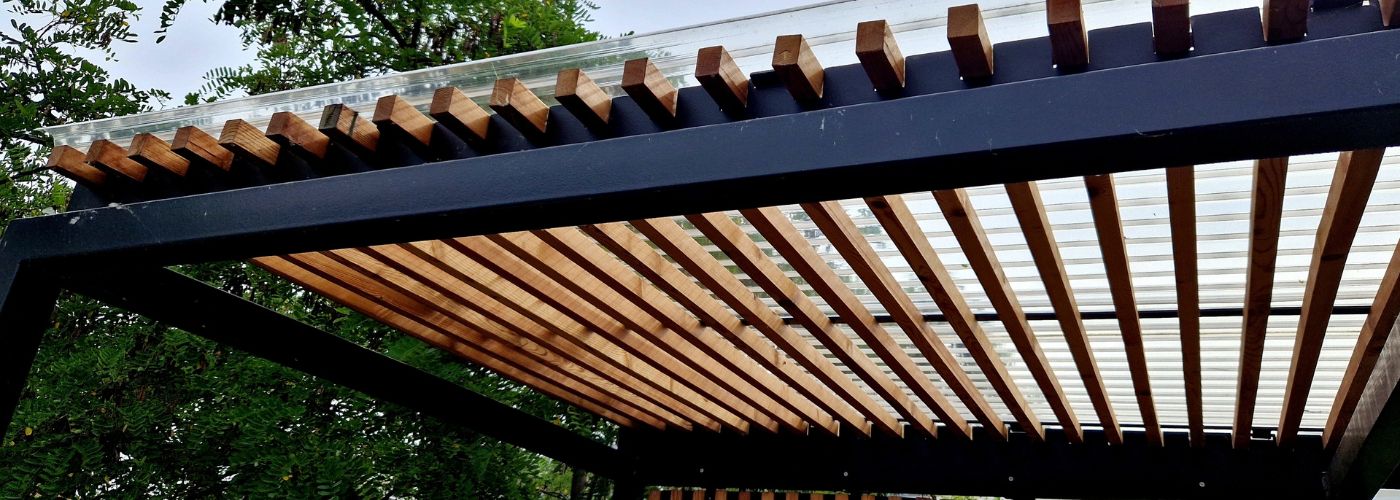
Traditional open-roof pergolas provide partial shade through their overhead beams or slats. The amount of sunlight that passes through depends on the structure’s spacing and orientation.
Some designs add shade panels, fabric coverings, or adjustable louvers to give greater control over sunlight.
Material selection is another important consideration. Wood offers a natural appearance but may require periodic maintenance.
Aluminum and other manufactured materials offer different maintenance needs, though performance depends on the specific product and finish.
A pergola works best when its design provides the desired amount of shade while complementing the surrounding outdoor space.
Homeowners should also consider the structure’s dimensions, support requirements, and placement relative to nearby doors, windows, and landscaping.
How Sun Exposure Affects Outdoor Living Spaces
Sun exposure is one of the most important factors when planning an outdoor living area in Southern Nevada. In summer, direct sunlight can make patios, outdoor furniture, and surrounding surfaces uncomfortable. The amount of shade available also changes throughout the day as the sun moves across the sky.
West-facing outdoor spaces may receive intense afternoon sunlight, while east-facing areas often experience more direct sun earlier in the day.
South-facing spaces can receive substantial sunlight depending on the season and surrounding structures. Nearby buildings, walls, trees, and rooflines can also affect how much natural shade you get.
Before selecting a shade structure, homeowners should observe their backyard at different times. Pay attention to where sunlight falls during the hours you use the space most.
This can help you decide whether overhead coverage, vertical screening, or a combination of features will work best.
Understanding the direction and timing of sunlight can prevent homeowners from installing shade that does not adequately cover their main outdoor seating areas.
Position a structure based on actual sun exposure rather than appearance alone.
Retractable Awnings for Flexible Patio Coverage
Retractable awnings provide adjustable shade for homeowners who don’t want permanent overhead coverage all day.
These systems extend when shade is needed and retract when homeowners want more sunlight or an unobstructed view of the sky.
People often consider them for patios, decks, and seating areas near a home’s exterior. Depending on the product, operation may be manual or motorized. Available fabrics, dimensions, and mounting options vary by system.
One advantage of retractable shade is flexibility. A homeowner may prefer coverage on sunny afternoons while letting natural light into nearby rooms at other times. However, awnings have operating limitations, particularly during strong winds or severe weather.
Retractable awnings are useful when homeowners want adjustable sunlight coverage without committing to a permanently covered outdoor area.
Before choosing a system, review mounting requirements, weather limitations, and the manufacturer’s operating instructions. It also helps to work with a general contractor to ensure that the addition is safe for home use.
Shade Sails for Modern Backyard Spaces
Shade sails are fabric panels suspended between secure attachment points to create overhead shade. Their angled shapes can add a modern look to a backyard while covering specific areas such as patios, play spaces, or outdoor seating.
These systems are available in different sizes, shapes, and materials. Some fabrics are designed primarily for sun protection, while others also resist light rain. The level of UV protection, breathability, and weather performance depends on the material you choose.
Proper installation matters because tensioned shade sails place loads on their supporting posts and attachment points. Consider wind exposure, drainage, and structural support. The placement of each attachment point also determines the final shape and coverage area.
Shade sails can provide targeted coverage while adding an architectural feature that doesn’t visually dominate the backyard. Homeowners should evaluate long-term maintenance needs and whether the selected fabric suits the local climate.
Adding Shade Around Outdoor Dining Areas
Outdoor dining areas have different needs from decorative garden spaces or open lawns. Tables and chairs need enough room for people to move comfortably, and the shade structure should cover where guests will actually sit.
A canopy that only covers the center of a table may leave surrounding chairs exposed to direct sunlight.
When planning an outdoor dining space, consider table dimensions, the number of seats, and the clearance needed to pull chairs away from the table. Nearby doors and walking paths also matter, especially when food and supplies are carried between indoor and outdoor areas.
Overhead shade can make dining areas more comfortable, but don’t overlook airflow. Solid barriers or enclosed arrangements may reduce ventilation depending on their design. If the area will be used after sunset, incorporate lighting into the planning process.
A comfortable outdoor dining area needs enough shade for the entire seating arrangement, not just the dining table itself. Designing around the furniture layout can help create a more practical space for everyday meals and gatherings.
Covered Patios for More Consistent Sun Protection
A covered patio provides a more permanent overhead barrier against direct sunlight. Unlike an open pergola, a patio cover with a solid roof can create a consistently shaded area beneath it when the sun is high enough for the roof to block it.
This makes covered patios worth considering for outdoor dining areas and regularly used seating spaces.
Patio covers can be attached structures that extend from the home or freestanding features elsewhere on the property.
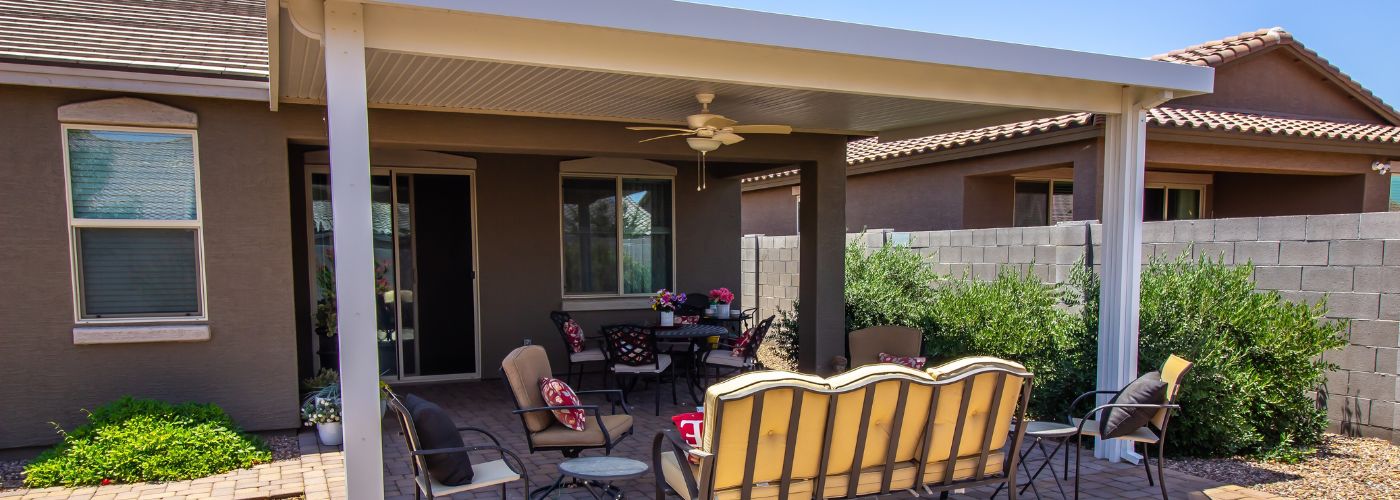
The right arrangement depends on the home’s architecture, available yard space, and intended use. Roof height, structural supports, drainage, and connections to the existing building all require attention.
However, a solid roof does not guarantee complete protection from low-angle sunlight. Afternoon sun may still reach the space from the side, particularly when the patio faces west.
Additional screening or strategically placed landscaping can help address this.
A properly planned patio cover can create a defined outdoor living area while providing more consistent overhead shade than an open-roof structure.
Its size and location should reflect furniture placement, circulation space, and sunlight direction.
Planning Shade for Outdoor Kitchens and Cooking Areas
Outdoor kitchens introduce additional considerations because cooking equipment produces heat and may require specific clearances. While shade can make surrounding preparation and seating areas more comfortable, not every overhead covering is appropriate above grills, burners, or other cooking appliances.
Follow the manufacturer’s instructions and applicable building and fire requirements when placing cooking equipment. Before deciding where to install a shade feature, evaluate combustible materials, ventilation, overhead clearances, and nearby structures.
Homeowners may find it useful to separate cooking and dining zones. For example, you can place a shaded preparation counter or dining area near a cooking station without putting an unsuitable covering directly over heat-producing equipment.
Plan shade structures around outdoor kitchens with equipment clearances, ventilation, and fire safety in mind. The design should support comfortable movement between cooking, serving, and seating areas without creating unnecessary hazards.
Using Trees and Landscaping to Create Natural Shade
Shade does not always need to come from a constructed patio cover. Trees and landscaping can provide natural coverage while adding texture, greenery, and visual interest to a backyard.
However, plant selection should account for the desert climate and how much maintenance homeowners are willing to manage.
Tree placement influences where shade falls throughout the day. A tree positioned near a seating area may provide useful coverage during certain hours while leaving the same area exposed at other times. Consider mature size, root growth, irrigation needs, and distance from structures.
Some desert-adapted trees may require less irrigation than plants suited to wetter climates, but water requirements still vary by species and establishment stage. Homeowners should also consider leaf litter, pruning, and potential interference with walls, paving, and underground utilities.
Natural shade can complement permanent outdoor remodeling structures when landscaping matches the property’s available space and growing conditions. Trees take time to mature, so homeowners may need a separate shade solution while new landscaping becomes established.
Let's Bring Your Ideas to Life
Planning a Home Remodeling Project?
Inspired to make a change? Pacific Experts is here to help you explore your options and take the next step toward transforming your Las Vegas home.